
Where to Take a Multigenerational Family Trip Everyone Will Enjoy
Tripdash Team
July 7, 2026
A practical guide to picking a destination and trip style that works for grandparents, teens, and toddlers all in one itinerary.
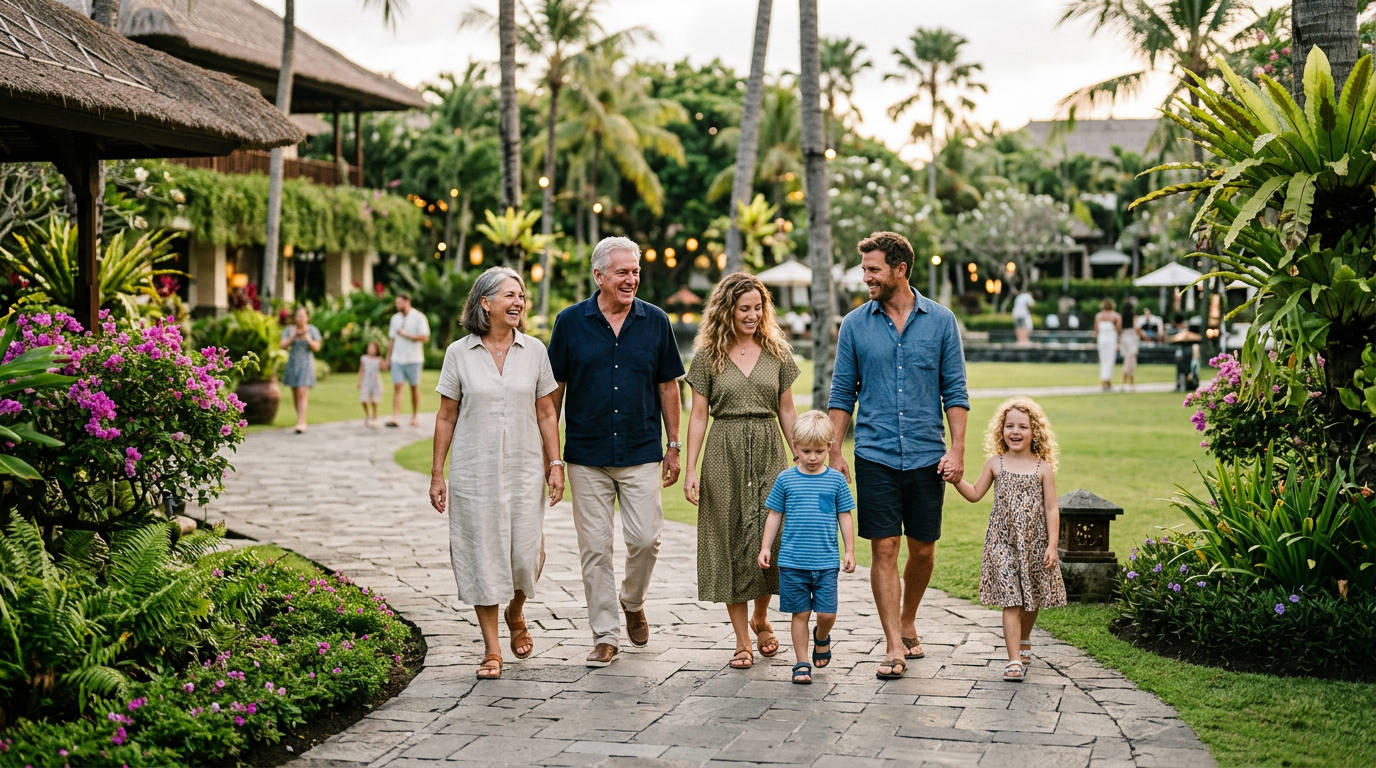
Planning a family trip is easy when everyone is roughly the same age and wants the same things. It gets much harder when the group spans a toddler who needs a nap schedule, a teenager who would rather be anywhere without their parents, and grandparents who want a slower pace and a comfortable bed. Multigenerational travel keeps growing precisely because families are stretched across time zones and busy calendars, and a shared vacation has become one of the few reliable ways to get everyone in the same place at once. The trick is picking a destination and trip style flexible enough to fit all of those needs.
Certain destination types are built for exactly this problem. They offer enough structure that grandparents aren't managing logistics, enough activity variety that teens aren't bored, and enough flexibility that parents of young kids can duck out for naps or early bedtimes without missing the trip. Below is a practical look at what works and how to plan around the real differences in energy, mobility, and interest in a three-generation group.
All-Inclusive Resorts: Built-In Flexibility for Everyone
All-inclusive resorts consistently top the list for multigenerational trips because they solve the biggest logistical headache: nobody has to agree on where to eat dinner. With multiple restaurants and room service typically included, a grandparent who wants a quiet meal at 6 p.m. and a teenager who wants to eat poolside at 9 p.m. can both get what they want.
Kids' clubs are another major advantage. Many resorts offer supervised programs for different age brackets, so toddlers and school-age kids get age-appropriate activities while parents and grandparents get a few hours to themselves. Teens tend to gravitate toward water sports, teen lounges, or resort excursions, occupied without a separate itinerary built just for them.
For grandparents, the appeal is comfort and predictability. Rooms are typically all on one property, there's minimal walking between activities, and staff are used to accommodating mobility differences. The Caribbean, Mexico's Riviera Maya, and parts of the Mediterranean have large concentrations of family-oriented all-inclusive properties, often with rooms or suites that sit near each other, which matters when a group needs to split up and regroup throughout the day.
National Park Lodges: Shared Awe, Adjustable Effort
National park lodges offer something all-inclusive resorts don't: a sense of shared adventure that doesn't feel manufactured. Watching a sunset over a canyon or spotting wildlife from a lodge porch tends to land with every generation, in different ways. The key is choosing a park and lodge with a range of activity intensity built in.
Places like Yellowstone, Grand Canyon, Yosemite, and Glacier National Park have lodges near easy boardwalk viewpoints alongside more demanding trails. That range matters. A grandparent with knee trouble can enjoy the same viewpoint a teenager hikes an extra two miles to reach, and a toddler in a carrier can join a short, flat loop trail while older kids do something more ambitious with one parent.
The trade-off is less built-in childcare and fewer dining options than a resort, so the group needs to be more self-sufficient. A car with enough space for gear, layers for fast-shifting weather at elevation, and lodge rooms booked well in advance (many fill up a year ahead for peak season) all matter more here than at an all-inclusive.
Cruise Options: One Home Base, Constant New Scenery
Cruises solve the "everyone wants to see something different" problem in a unique way: the destination changes daily, but nobody has to pack a bag or check into a new hotel. That single detail often sells grandparents on the idea, since unpacking once removes a lot of the physical strain of a multi-stop trip.
Family-oriented cruise lines also tend to have the most robust kids' and teens' programming of any trip style here, often organized by tight age bands rather than one generic "kids' club." Adults can choose from adult-only pool decks, spas, or quiet lounges when they want a break from the group.
Shore excursions are where cruises really shine for multigenerational groups, because most ports offer a tiered menu: an easy walking tour for grandparents, a snorkeling or zipline excursion for teens, and a shorter beach day for parents with toddlers. Everyone can rejoin for dinner back on the ship with their own version of the day to talk about.
Villa-Based Trips: Space, Privacy, and a Shared Kitchen
A rented villa or large house suits families who want to be together without being on top of each other constantly. The biggest advantage is space: separate bedrooms and bathrooms, a common living area, and often a private pool mean grandparents can retreat for an afternoon nap, teens can sleep in, and toddlers can nap on a normal schedule, all under one roof.
A shared kitchen changes the dynamic of meals too. The group can cook some nights and go out for others, reducing cost and stress alike, and it gives relatives who enjoy cooking a natural role in the trip rather than just tagging along.
Villa trips require more planning upfront than an all-inclusive or cruise. Someone needs to handle groceries, transportation, and a loose activity schedule, since there's no built-in program to fall back on. Tripdash and similar planning tools make this easier, letting one person build a shared itinerary that others can see and adjust rather than relying on a group chat and a spreadsheet. Popular regions for villa-based trips include Tuscany, Provence, coastal Portugal, and Hawaii's outer islands, all of which combine walkable towns or short drives with real downtime at the house itself.
Comparing the Trip Styles
| Trip Style | Best For | Why It Works |
|---|---|---|
| All-inclusive resort | Toddlers, grandparents with mobility concerns | Everything on one property; flexible dining and nap schedules |
| National park lodge | Teens and active grandparents who want shared scenery | Trails of varying difficulty lead to the same views |
| Cruise | Large groups with wide age gaps | New destination daily without repacking; tiered excursions |
| Villa rental | Families wanting privacy and unstructured time | Separate space plus shared common areas and a kitchen |
Planning Tips for Balancing Different Energy Levels
Choosing the right destination type is half the battle. The rest comes down to how the trip is structured once you're there.
- Build in optional, not mandatory, group activities so nobody feels forced into something that doesn't interest them.
- Plan one or two "everyone together" moments per day, like a shared dinner or sunset viewing, rather than trying to do everything as a group.
- Ask grandparents directly about mobility and stamina before booking, rather than assuming based on age.
- Give teenagers some independence, whether that's a later curfew on a cruise or a solo excursion with a sibling.
- Schedule downtime for toddlers and young kids around their existing nap or bedtime routine instead of the group's ideal schedule.
- Split into smaller subgroups for excursions or activities, then regroup for meals.
- Set a shared budget conversation early, since multigenerational trips often mean someone is covering costs unevenly.
- Use a shared itinerary or planning app so changes and updates reach everyone without relying on one person to relay information.
Making the Final Decision
There's no single best destination for every multigenerational family, since so much depends on the mix of ages, mobility levels, and interests in your group. A family with very young grandchildren and grandparents who tire easily will likely lean toward an all-inclusive resort or a cruise. A family with older teens and active grandparents might get more out of a national park lodge or a villa trip, where there's room for bigger adventures alongside quieter days.
Length of stay matters too. A week tends to work better than a long weekend, since it takes a day or two for a large group to settle into a rhythm. If grandparents are flying internationally while the rest of the family is only a few hours away by car, a buffer day before major activities start can keep everyone from starting the trip jet-lagged and cranky.
Whatever style you choose, the families who report the best experiences plan for differences rather than around them, building flexibility into the schedule instead of assuming everyone wants the same thing at the same time. That one shift in approach tends to matter more than the destination itself.
Frequently asked questions
More from Tripdash

The Advisor Who Catches the Layover Marlow Missed
An illustrative case study of how a Tripdash advisor rebuilt a connection that Marlow's AI draft technically approved but shouldn't have. It's a close look at what human review of AI travel plans actually catches, and why the minimum connection time on a boarding pass is not the same thing as a safe one.

The Advisor Who Specializes in Solo Travel for Women
An illustrative look at why some Tripdash advisors build a niche reviewing trips for solo female travelers, and how that specialization plays out inside the queue.

The Difference Between an AI Draft and a Bookable Itinerary
Marlow can draft a trip in about a minute, but a draft is not the same thing as a trip you can pay for. Here is exactly what changes between the two, and why the gap matters.