
How Currency and Card Fees Quietly Add Up on International Trips
Tripdash Team
July 7, 2026
Foreign transaction fees, dynamic currency conversion, and bad exchange rates can quietly eat into a travel budget. Here is what to check before you book so the deal you found stays the deal you pay.
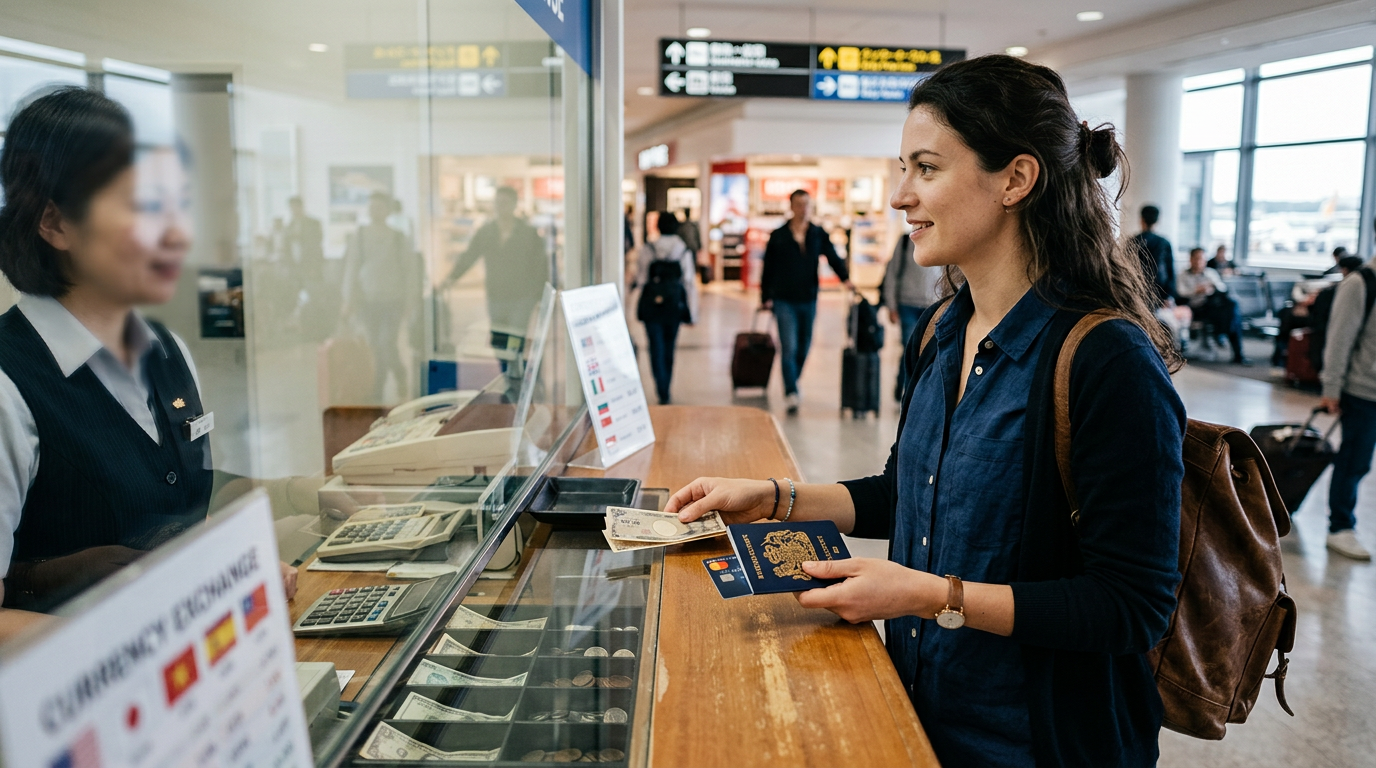
A flight deal or a discounted hotel rate can feel like a win the moment you book it. But the final cost of a trip is rarely decided at booking. It is decided in the dozens of small, unnoticed transactions that happen once you land: the card swipe at a cafe, the ATM withdrawal at the train station, the currency counter at the airport. Each of these moments carries a small fee or a slightly worse exchange rate, and none of them show up on the receipt in a way that is easy to spot. By the end of a trip, they can add up to a meaningful chunk of the budget, sometimes more than the discount that made the trip feel like a bargain in the first place.
This is not about any one bank or any one country. It is about understanding the mechanics of how money moves across borders, so you can check the right things before you book and avoid watching a good deal shrink at checkout. Tripdash builds this kind of cost awareness into how it surfaces trip pricing, but the habits below apply no matter how you booked.
What a Foreign Transaction Fee Actually Is
A foreign transaction fee is a charge that many credit and debit cards apply whenever a purchase is processed in a currency other than your home currency, or routed through a bank outside your home country. It is usually a percentage of the purchase amount, and it is added quietly to your statement rather than shown at the point of sale. A traveler using a card with this kind of fee will pay a little extra on every single purchase abroad, from a bottle of water to a hotel bill, and the cost compounds because it applies transaction by transaction rather than once per trip.
The tricky part is that this fee is often invisible in the moment. You tap your card, the transaction goes through, and the extra cost only becomes visible days or weeks later when the statement arrives. Many travelers never connect the dots between a slightly higher statement total and the fact that their card charges this fee on every international purchase. Checking your card's terms before a trip, rather than after, is the only reliable way to know if this applies to you.
The Dynamic Currency Conversion Trap
One of the most common ways travelers lose money abroad is dynamic currency conversion, often abbreviated as DCC. This happens when a merchant or ATM abroad offers to charge you in your home currency instead of the local currency. It sounds convenient, and it is often presented as a helpful option: you get to see the price in dollars, euros, or whatever currency you use at home, right there on the screen before you confirm.
The problem is that the exchange rate used for this conversion is set by the merchant or the ATM operator, not by your card network. That rate is typically worse than the rate your card issuer would apply if the transaction were processed in the local currency, sometimes by a noticeable margin. In effect, you are paying extra for the convenience of seeing a familiar currency symbol, and that convenience is rarely worth what it costs. This trap shows up constantly at point-of-sale terminals, at self-checkout kiosks, and especially at ATMs, where a screen might ask "would you like to be charged in your home currency instead?" The safest answer, almost always, is no. Choosing to be charged in the local currency lets your own card network handle the conversion, which is generally a better deal.
Why Airport Currency Exchange Rarely Wins
Exchanging cash at an airport counter feels like a reasonable, even responsible, thing to do before a flight. In practice, it is usually one of the worst places to convert money. Airport currency exchange kiosks operate in a captive environment. Travelers rushing to a gate do not have time to shop around, and the kiosks know it. Their rates typically build in a wider margin than what you would get from an ATM withdrawal in local currency or a bank transfer, and on top of that margin there is often a flat service fee or commission.
The difference is rarely dramatic on a single transaction, but for anyone converting a meaningful amount of cash, the gap between an airport rate and a typical ATM or bank rate can be the cost of a meal or two on the trip. If cash is genuinely necessary, it is generally more favorable to withdraw smaller amounts from an ATM after arrival, using a card that does not pile on extra fees, rather than converting a large sum at the airport before departure. Currency exchange counters in city centers or at your destination are also often somewhat better than airport locations, simply because they are not relying on a captive, time-pressured customer base.
Fee Types at a Glance
The table below frames the general categories of cost travelers run into, along with typical ranges and ways to reduce or avoid each one. These are general patterns rather than fixed numbers, since actual costs vary by card issuer, bank, and destination.
| Fee Type | Typical Range | How to Avoid It |
|---|---|---|
| Foreign transaction fee (credit/debit card) | Roughly 1% to 3% of each purchase | Use a card explicitly marketed as having no foreign transaction fees |
| Dynamic currency conversion (DCC) | Often several percentage points worse than standard rates | Always choose to be charged in the local currency, not your home currency |
| Airport currency exchange | Wider margin plus a possible flat commission | Exchange smaller amounts, or withdraw local currency from an ATM after arrival instead |
| ATM withdrawal fee (foreign ATM) | A flat fee plus a possible percentage, sometimes charged by both banks involved | Use a card or account designed to reimburse ATM fees abroad, and withdraw larger amounts less frequently |
| Card network conversion markup | Usually a small percentage built into the exchange rate itself | Compare card issuers, since some build in less markup than others |
Before You Book: What to Check
Much of this cost is avoidable simply by doing a few checks before a trip begins, rather than reacting to fees after they show up on a statement.
- Check whether your primary credit card charges a foreign transaction fee, and if it does, consider applying for one that does not before the trip, since approval can take time.
- Check whether your debit card charges fees for foreign ATM withdrawals, and look at whether your bank has partner ATMs abroad that waive them.
- Notify your bank or card issuer of your travel dates and destinations so a legitimate purchase abroad is not mistaken for fraud and frozen.
- Decide in advance that you will always choose to pay in local currency when a card terminal or ATM asks, and mentally rehearse this so it is automatic in the moment.
- Compare a small sample of exchange rates ahead of time, using a currency conversion app or your bank's published rate, so you have a rough benchmark for what a fair rate looks like at your destination.
- Pack a mix of payment methods rather than relying on a single card, since having a backup avoids being forced into a bad exchange situation if one card is lost or declined.
- Withdraw local currency in moderate amounts rather than large lump sums, reducing the sting of any single ATM fee while limiting how much cash you carry.
Building It Into How You Plan
None of these fees are secret, but they are designed to be easy to overlook. A foreign transaction fee is a line on a cardholder agreement most people never read closely. Dynamic currency conversion is presented as a convenience rather than a cost. Airport exchange counters look official and trustworthy even when their rates are not competitive. The common thread is that all three rely on travelers not stopping to check.
The good news is that checking takes very little effort compared to the savings involved. A few minutes reviewing your card's fee structure, a firm habit of choosing local currency at the point of sale, and a willingness to skip the airport exchange counter can preserve a meaningful share of a travel budget. When Tripdash surfaces pricing for flights, stays, and activities, the goal is to reflect what a trip actually costs to book. Making sure the money you spend once you land does not quietly erode that value is the next step, and it is one entirely within a traveler's control.
A good deal on a flight or a hotel is only part of the picture. The other part is what happens every time you tap a card or pull cash from a machine after you arrive. Paying attention to both is what keeps a trip's real cost close to what you planned for.
Frequently asked questions
More from Tripdash

The Advisor Who Catches the Layover Marlow Missed
An illustrative case study of how a Tripdash advisor rebuilt a connection that Marlow's AI draft technically approved but shouldn't have. It's a close look at what human review of AI travel plans actually catches, and why the minimum connection time on a boarding pass is not the same thing as a safe one.

The Advisor Who Specializes in Solo Travel for Women
An illustrative look at why some Tripdash advisors build a niche reviewing trips for solo female travelers, and how that specialization plays out inside the queue.

The Difference Between an AI Draft and a Bookable Itinerary
Marlow can draft a trip in about a minute, but a draft is not the same thing as a trip you can pay for. Here is exactly what changes between the two, and why the gap matters.