
Japan Itinerary for First-Timers: How to Plan a Trip Without Losing Your Mind
Tripdash Team
July 7, 2026
Planning a first trip to Japan usually means drowning in city names, train options, and conflicting advice. Here's how to sequence your route, decide how many days per region, and skip the mistakes that turn a dream trip into a blur.
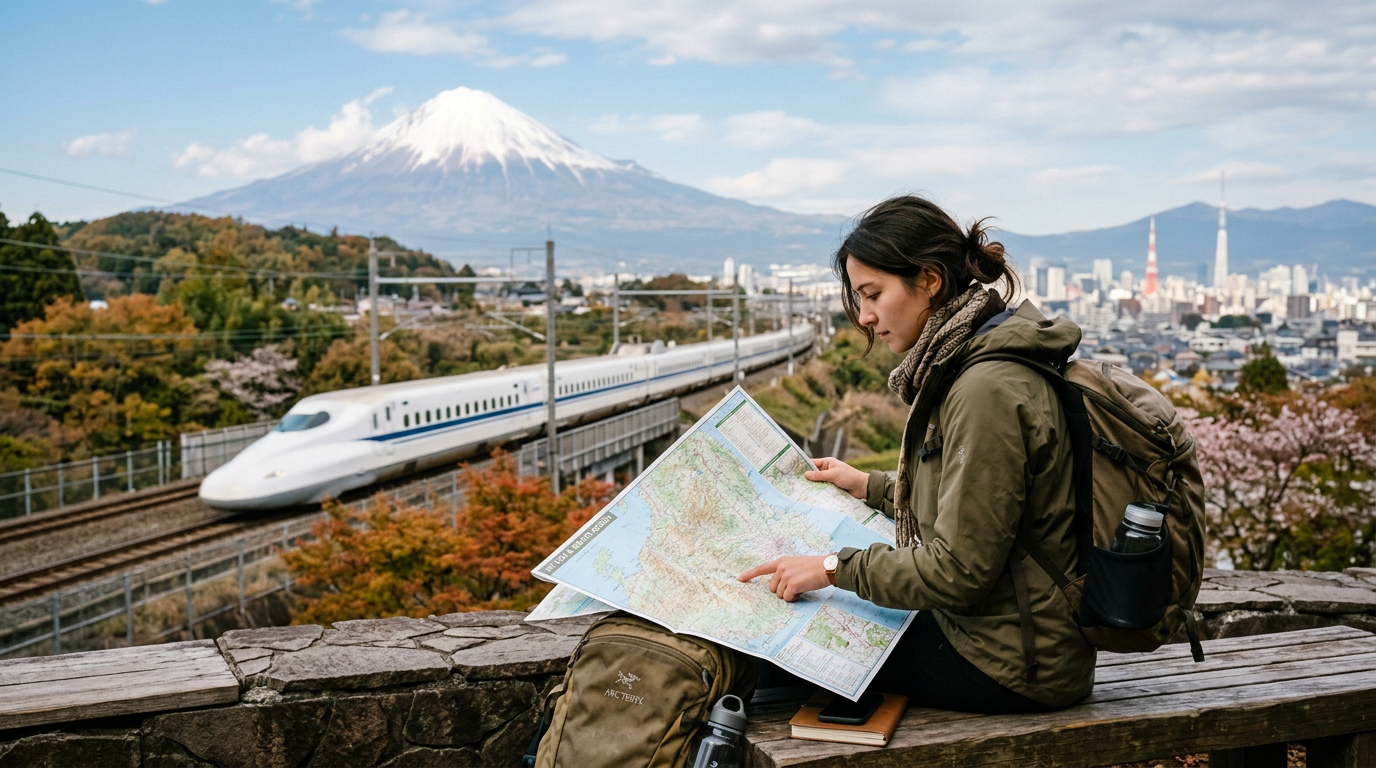
Japan sounds complicated to plan until you realize almost every first-timer makes the same three mistakes: too many cities, too much backtracking, and a JR Pass bought out of habit instead of math. Fix those three things and the rest of the trip plans itself.
How Many Days Do You Need in Japan?
For a first trip, 10 to 14 days is the sweet spot. You can do a legitimate, unrushed introduction to Japan in 10 days if you keep it to two regions. Go much shorter and you'll spend a disproportionate chunk of the trip on trains and check-ins instead of actually being anywhere. Go longer than 14 and you'll want a third or fourth region, which is great, just budget more days per stop rather than adding more stops.
A simple rule that holds up: figure on 3 to 4 full days per major city or region, plus a half day on each end for arrival grogginess and travel. Tokyo alone can absorb 4 to 5 days without repeating yourself. Kyoto plus a Nara day trip wants 3 to 4. Osaka is a strong 2 to 3 day add-on next to Kyoto since they're 15 minutes apart by train. Hiroshima is usually a day trip or overnight, not a standalone base, unless you're pairing it with Miyajima.
The first-timer instinct is to build a wish list city by city (Tokyo, Kyoto, Osaka, Hiroshima, Nara, maybe Hakone, maybe Kanazawa) and try to fit all of them into 9 days. That's how you end up eating breakfast at 6 a.m. to catch a train, remembering the trip as a blur of platforms. Pick fewer places and let each one breathe.
Sequencing Your Route: Why Direction Matters
Japan's geography does a lot of the planning for you if you let it. Most first-timers fly into Tokyo (Narita or Haneda) and out of Osaka (Kansai), or the reverse. Flying into one city and out of another, rather than looping back, saves an entire redundant train leg and a half day you didn't need to spend.
The classic, still-smart route is Tokyo, then south and west: Hakone or the Mt. Fuji area as a short stop, then Kyoto, then Osaka, with Nara and Hiroshima as day trips or short add-ons depending on how much time you have. This follows the Tokaido and Sanyo Shinkansen corridor, so every leg is a single, direct, fast train ride rather than a maze of transfers.
Resist the urge to zigzag. A common overwhelmed-planner mistake is bouncing back and forth (Tokyo to Kyoto to Tokyo to Hiroshima) because that's the order the flights or hotel deals lined up. Every backtrack costs 2 to 3 hours minimum and, more importantly, breaks the momentum of the trip. Draw your cities on a map before you book anything and make sure the line only moves in one direction.
A Sample 12-Day First-Timer Split
If you want a concrete starting point, here's a split that follows the one-direction logic above and gives each stop enough breathing room:
- Days 1 to 5: Tokyo (arrival day, plus 4 full days for neighborhoods like Shibuya, Asakusa, Shinjuku, and a museum or teamLab-style day)
- Day 6: Hakone or the Mt. Fuji area (onsen night, ryokan stay, a change of pace from city density)
- Days 7 to 9: Kyoto (temples, Fushimi Inari, Arashiyama, plus a half day for Nara's deer park)
- Days 10 to 11: Osaka (food-focused, Dotonbori, Osaka Castle, easy 15-minute train from Kyoto)
- Day 12: Hiroshima and Miyajima as a long day trip from Osaka, or an overnight if you want it unrushed
This isn't the only valid route, but it shows the pattern: one direction, no backtracking, more days on fewer stops than most first drafts include.
Bullet Train vs. Flights: What Actually Makes Sense
The Shinkansen (bullet train) is the default for anything along the main Honshu corridor: Tokyo to Kyoto is about 2 hours 15 minutes, Kyoto to Hiroshima is about 1 hour 30 minutes, Tokyo to Hiroshima direct is around 4 hours. Stations are central, security is minimal, trains leave on time to the minute, and you can work, eat, or nap the whole way. For these city-to-city hops, the train wins on total door-to-door time once you factor in airport transit and security.
Flights start making sense once you leave the main corridor: Tokyo to Sapporo, Tokyo to Okinawa, or Osaka to Fukuoka if you're skipping the stretch in between. These routes are long enough by rail that flying saves real hours, and domestic flights within Japan are frequent and reasonably priced.
The JR Pass math has changed since the price increased a while back, so don't assume it's automatically worth it. Add up the actual Shinkansen fares for your planned route first. If your trip is basically Tokyo-Kyoto-Osaka round trip territory, a regional or single-leg pass, or just buying tickets as you go, is often cheaper than a nationwide pass. The pass tends to pay off when you're covering long distances more than once, like Tokyo to Hiroshima and back, or adding a Hokkaido or Kyushu leg.
Common First-Timer Mistakes Worth Avoiding
Beyond the too-many-cities trap, a few smaller mistakes show up constantly on first Japan trips. Underestimating Tokyo is a big one: people treat it as a 2-day layover before the "real" trip starts, then realize they needed a week. Overbooking every day is another: Japan rewards a slower pace, and leaving one loosely planned day per city for wandering or resting produces better memories than a rigid hour-by-hour itinerary.
Not booking popular restaurants or some hotels ahead of time is a recurring regret, especially in Kyoto during cherry blossom or fall foliage season, when the city fills up months out. On the flip side, over-planning every meal removes the fun of wandering into a random ramen counter, so the goal is booking the handful of places you'd be genuinely disappointed to miss and leaving the rest open.
Currency trips people up too: Japan is more card-friendly than it used to be, but small restaurants, shrines, and rural areas are often still cash-only, so carrying yen is not optional. And luggage: dragging large suitcases through station stairs and packed city trains is miserable. Japan's takuhaibin (luggage forwarding) services move your bags between hotels overnight for a small fee, worth using at least once on any multi-city route.
Where Marlow Fits Into This
None of this is a mystery once you've done it, but it takes real research time to work out the right number of days per city, whether a JR Pass pencils out for your route, and which order avoids backtracking. That's the part Marlow, Tripdash's AI, is built to shortcut. Tell it your dates, must-see list, and pace preference, and it drafts a full day-by-day plan, cities sequenced sensibly, trains versus flights already sorted, in about 60 seconds.
The plan isn't the finish line, though. A human advisor reviews what Marlow drafted, checks it against things like festival dates, seasonal closures, or a hotel that's better swapped for one two blocks over, and adjusts it with you before anything gets booked. You're not locked into the first draft, and you're not paying a booking fee for that back-and-forth. Plan free. Book human. For a country where the difference between a good itinerary and a great one often comes down to knowing which three cities to skip, having both the fast draft and the second opinion matters.
Whichever way you build your itinerary, the underlying advice doesn't change: fewer cities, one direction, trains where they make sense, and at least one day per stop where you have nowhere you have to be.
Frequently asked questions
More from Tripdash

The Advisor Who Catches the Layover Marlow Missed
An illustrative case study of how a Tripdash advisor rebuilt a connection that Marlow's AI draft technically approved but shouldn't have. It's a close look at what human review of AI travel plans actually catches, and why the minimum connection time on a boarding pass is not the same thing as a safe one.

The Advisor Who Specializes in Solo Travel for Women
An illustrative look at why some Tripdash advisors build a niche reviewing trips for solo female travelers, and how that specialization plays out inside the queue.

The Difference Between an AI Draft and a Bookable Itinerary
Marlow can draft a trip in about a minute, but a draft is not the same thing as a trip you can pay for. Here is exactly what changes between the two, and why the gap matters.