
Safari Planning Without the Guesswork
Tripdash Team
July 7, 2026
Safari planning gets confusing fast once you start comparing countries, seasons, and camp types that all claim to be the best. Here's what actually differs between Kenya, Tanzania, and Botswana, when to go, and how to avoid the mistakes first-timers make most often.
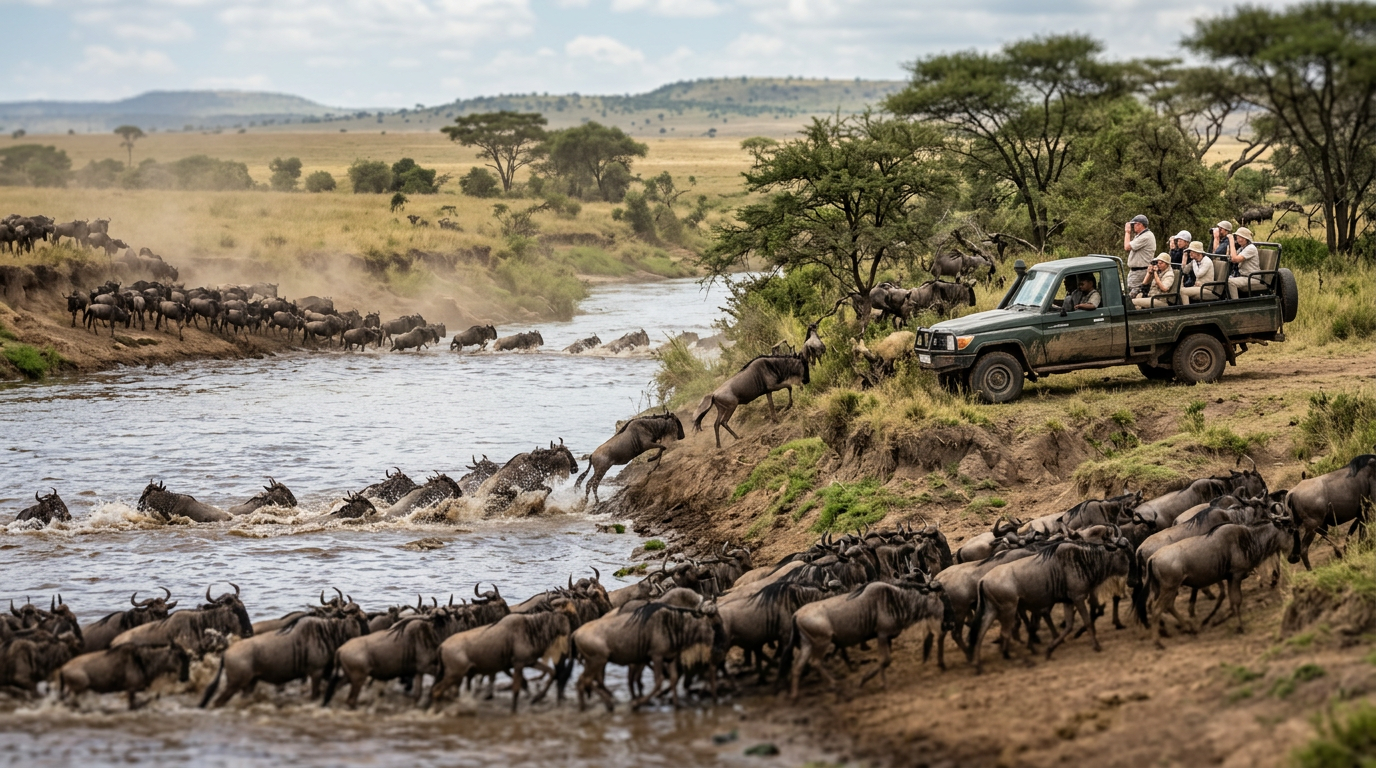
Ask five people where to go on safari and you'll get five confident, contradictory answers. That's not because safari planning is mysterious. It's because the honest answer is "it depends," and most articles skip straight past the part where they explain what it depends on. Country, season, and camp type each pull the trip in a different direction, and a good plan reconciles all three against your budget and your dates rather than chasing whichever destination is trending.
This is the version of the guide that tries to actually explain the tradeoffs, not just list Instagram-famous lodges.
Choosing a Country or Region
The three most common starting points for a first safari are Kenya, Tanzania, and Botswana, and the differences are real, not just marketing.
Kenya's parks, especially the Maasai Mara, are built around open, rolling grassland that makes game viewing easy even for a first-timer with no tracking experience. Predator sightings tend to be frequent because the terrain offers so little cover. The Mara is also the northern stage of the wildebeest migration for part of the year, and Kenya's parks sit close enough together that a one-week trip can realistically combine two or three ecosystems, from the Mara to Amboseli's elephant herds under Kilimanjaro to the Laikipia conservancies further north.
Tanzania is bigger and more varied. The Serengeti alone is roughly the size of a small country, and it connects to the Ngorongoro Crater, a collapsed volcanic caldera that holds one of the densest concentrations of resident wildlife anywhere, plus Tarangire, known for its baobabs and elephant families. Tanzania holds the migration for most of the year, which means the "best" spot to see it shifts by month, from the southern Serengeti calving grounds early in the year to the western corridor and eventually the river crossings further north. Distances between parks are longer than in Kenya, so itineraries often lean more heavily on light aircraft transfers.
Botswana is a different animal entirely, often literally. The Okavango Delta is a seasonal floodplain, not classic savanna, and safaris there mix game drives with mokoro (canoe) trips and walking safaris through channels and islands. Chobe National Park, in the north, has one of the highest elephant densities in Africa. Botswana runs a low-volume, high-cost model by design, with strict caps on the number of camps and vehicles per concession, which means a quieter, more exclusive experience but a noticeably higher price tag than Kenya or Tanzania.
South Africa deserves a mention too, mainly because it's the easiest entry point logistically. Kruger National Park and its private reserves allow self-drive safaris and pair naturally with Cape Town, which makes it a common choice for travelers who want to combine wildlife with wine country and a coastal city in one trip.
Best Time for Safari: Dry Season vs Green Season
The single biggest lever in safari planning is timing, and it matters more than which specific lodge you book.
Dry season, roughly June through October across most of East and Southern Africa, is when vegetation thins out and animals concentrate around rivers and waterholes. Visibility is at its best, roads are passable, and this is when the wildebeest migration typically delivers its dramatic river crossings in the northern Serengeti and Mara. It's also peak season, meaning higher rates and camps booked out months in advance.
Green season, roughly November through May with a short dry spell in January and February in some regions, brings lush landscapes, dramatic skies, and newborn animals, since many species time their births to coincide with fresh grass. Birdlife is far more active. Rates drop meaningfully, sometimes by a third or more, and camps are noticeably less crowded. The tradeoff is thicker vegetation that can make spotting animals harder, plus the chance of afternoon rain showers that can affect some game-drive days, though rarely the whole trip.
Neither season can produce an excellent trip. The real question is what you're optimizing for: guaranteed high-density predator action and migration drama versus better light, better value, and a quieter camp.
Lodge, Tented Camp, or Mobile Camp
Accommodation style changes the character of a safari as much as the destination does.
Permanent lodges are the most comfortable option, often with pools, spa services, and solid Wi-Fi. They suit travelers who want reliability and don't mind a more hotel-like atmosphere. Prices vary widely, but lodges tend to sit in the middle to upper price bands.
Permanent tented camps are the classic safari experience most people picture: canvas walls, en-suite bathrooms, a private deck, but built on a fixed platform with real beds and proper plumbing. They usually deliver a more intimate, closer-to-nature feel without sacrificing much comfort, and they dominate the mid-to-upper end of the market.
Mobile tented camps pack up and move with the seasons or the migration, which means smaller footprints, fewer guests, and a genuinely rustic feel, sometimes with bucket showers and paraffin lanterns instead of grid power. They're popular with repeat safari-goers who want to follow the migration closely or get well off the main circuit, and they range from simple to surprisingly luxurious depending on the operator.
As a rough guide to budget tiers: a midrange safari, camping or budget lodges with shared vehicles, tends to run noticeably cheaper per night than a full-service tented camp with private game drives, which in turn sits below the ultra-exclusive end (private conservancies, fly-in-only camps, walking safaris with dedicated guides). None of these tiers is objectively "better"; they buy different things, comfort, privacy, exclusivity, and it's worth deciding which of those actually matters to you before comparing prices.
How Many Days and Parks to Combine
A common first-timer instinct is to try to see every famous park in one trip. Resist it. Flying or driving between parks eats a full day each time, and constant packing and moving erodes the actual time spent watching wildlife.
A reasonable rule of thumb: budget a minimum of three nights per park or reserve, since it typically takes at least two full days to get a real feel for an area and improve your odds across different habitats and times of day. For a first safari, two parks over seven to nine nights is usually a sweeter spot than three or four parks crammed into the same window. Pairing one open-plains park (like the Mara or Serengeti) with one different-terrain option (Ngorongoro Crater, a delta, or a forest reserve) gives good contrast without the fatigue of constant transfers.
What First-Timers Get Wrong
- Booking too late for peak season. Dry-season camps in popular parks fill up six to twelve months ahead; green-season trips can often be booked with a few months' notice.
- Overpacking the itinerary. More parks doesn't mean more sightings; it usually means more travel days and less time in the vehicle where it counts.
- Underestimating the north-south migration puzzle. The migration isn't in one place year-round. Chasing river crossings without checking the calendar is the single most common planning mistake.
- Skipping travel insurance and flexible fares. Light-aircraft schedules and weather can shift plans; rigid tickets and no coverage turn a minor delay into a real problem.
- Ignoring malaria prophylaxis and vaccination requirements. Most safari regions are malaria zones, and some countries require proof of yellow fever vaccination for entry or transit.
- Assuming all-inclusive means all-inclusive. Premium drinks, laundry, and some activities (hot air balloon rides, for instance) are frequently excluded even at high-end camps.
- Not budgeting for internal flights. Light aircraft between parks can add a meaningful amount to the overall trip cost, especially across Tanzania and Botswana.
This is also where the planning process itself can go wrong before the trip even starts. Comparing quotes from three different operators for three different combinations of parks and seasons is genuinely time-consuming, which is part of why we built Marlow, Tripdash's planning assistant. It drafts a full multi-park itinerary, with realistic pacing and season-appropriate camp suggestions, in about 60 seconds, and then a human advisor reviews and adjusts it before anything gets booked. The plan is free either way; you only pay when a licensed human confirms and books it.
Country Comparison at a Glance
| Region | Best Season | Wildlife Highlight | General Cost Tier | Ease for First-Timers |
|---|---|---|---|---|
| Kenya (Mara) | Jul-Oct (dry, migration) | Predators, open-plains game viewing | Mid to high | Easiest, compact distances |
| Tanzania (Serengeti/Ngorongoro) | Jun-Oct dry; year-round for migration in different sectors | Migration, crater wildlife density | Mid to high | Moderate, larger distances |
| Botswana (Okavango/Chobe) | May-Oct (dry) | Elephants, water-based wildlife viewing | High | Moderate, more exclusive/remote |
| South Africa (Kruger) | May-Sep (dry) | Big five, self-drive accessibility | Low to mid | Easiest for independent travelers |
Final Thought
The best safari isn't the one with the most famous name attached to it. It's the one where the season lines up with what you want to see, the camp style matches how rustic or comfortable you actually want to be, and the pace leaves room to sit still and watch. Get those three things right and the country you choose almost becomes secondary.
Frequently asked questions
More from Tripdash

The Advisor Who Catches the Layover Marlow Missed
An illustrative case study of how a Tripdash advisor rebuilt a connection that Marlow's AI draft technically approved but shouldn't have. It's a close look at what human review of AI travel plans actually catches, and why the minimum connection time on a boarding pass is not the same thing as a safe one.
The Advisor Who Specializes in Solo Travel for Women
An illustrative look at why some Tripdash advisors build a niche reviewing trips for solo female travelers, and how that specialization plays out inside the queue.

The Difference Between an AI Draft and a Bookable Itinerary
Marlow can draft a trip in about a minute, but a draft is not the same thing as a trip you can pay for. Here is exactly what changes between the two, and why the gap matters.