
What to Do the Moment Your Flight Gets Cancelled
Tripdash Team
July 7, 2026
A calm, step-by-step plan for what to do the moment your flight is cancelled, from rebooking through the app and phone at once to securing a hotel before overnight options disappear.
The First Five Minutes Matter More Than You Think
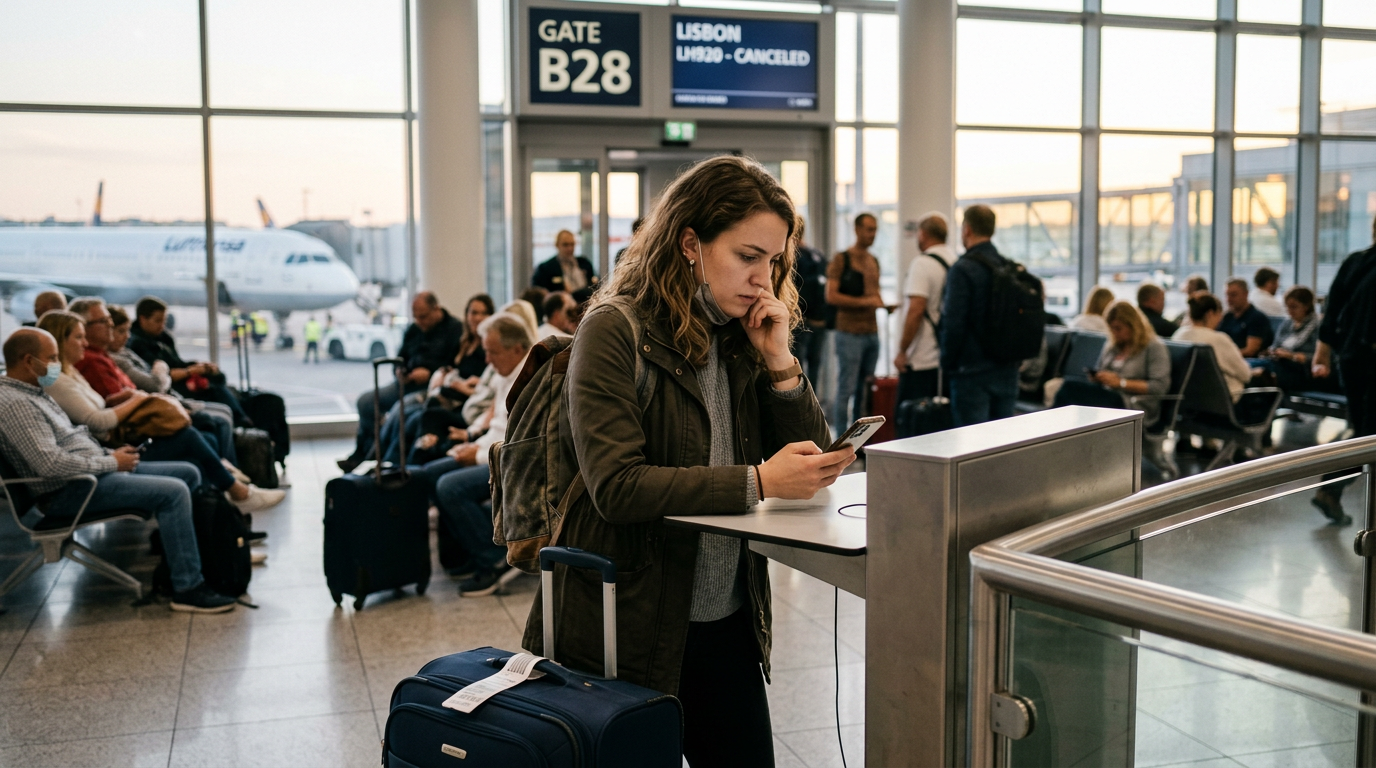
A flight cancellation notice lands on your phone and the instinct is to freeze, or worse, to sprint toward the nearest gate agent and join a line that's already fifty people deep. Neither reaction serves you well. The moment you see that cancellation message, a small window opens where you can secure a rebooking before the best seats on alternate flights disappear. Airlines rebook on a rolling basis, and the passengers who act fastest usually get the better options: earlier departures, nonstop routings, seats in the same cabin you originally booked.
This isn't about panic. It's about having a sequence ready so you're not improvising while standing in a crowded terminal with a dying phone battery. The steps below work whether you're traveling solo, with a family, or with a travel advisor on speed dial through a service like Tripdash.
Why Airlines Cancel Flights, and What It Means for You
Cancellations generally fall into a few buckets, and the reason often shapes what you're entitled to. Weather and air traffic control issues are typically treated as outside the airline's control, which affects whether you'll get meal vouchers or hotel coverage. Mechanical problems and crew scheduling failures are usually considered within the airline's control, and in many regions that distinction matters for compensation. Broader disruptions like strikes sit somewhere in between depending on whose strike it is.
None of this is standardized globally. Rules differ by country, by airline, and sometimes by the specific fare class you booked. A cancellation in the European Union may trigger different obligations than the same disruption originating in the United States or Southeast Asia. Treat the table below as a general orientation, not a legal guarantee, and always confirm specifics with the airline or a regulator's consumer guidance for your situation.
| Cancellation Cause | Typical Rebooking Options | Typical Compensation Likelihood |
|---|---|---|
| Weather or air traffic control | Free rebooking on next available flight | Low; often no cash compensation |
| Mechanical or crew issue | Free rebooking, sometimes meals or hotel | Moderate to high, depending on region |
| Airline schedule change | Free rebooking or refund | Varies widely by carrier policy |
| Strike (airline staff) | Free rebooking, possible accommodation | Moderate, region dependent |
| Strike (airport or third party) | Free rebooking | Low to moderate |
Passenger rights also vary depending on where you're flying from, where you're flying to, and which country's aviation authority has jurisdiction. Some regions have explicit compensation frameworks tied to delay length and cancellation notice. Others rely more on airline-specific customer commitments that aren't legally binding in the same way. A rule that applies on a flight departing one country may not apply on the return leg departing somewhere else, even on the same itinerary. Before you assume you're entitled to a specific payout or benefit, check the actual regulation that applies to your route, or ask the airline directly what their policy is for your specific cancellation. Consumer protection agencies in many countries publish plain-language guides for exactly this situation, and they're worth bookmarking before you ever need them, not after.
What to Do the Moment You Learn Your Flight Is Cancelled
This is the core sequence. Work through it in order, but don't wait for one step to finish before starting the next. Rebooking is a race against every other passenger on that cancelled flight, and multitasking is the whole strategy.
- Open the airline app immediately. Most carriers now let you rebook directly in-app, often faster than any phone line or counter. Check available flights before you do anything else.
- Call the airline while you're doing that. Don't wait to see if the app works first. Dial the airline's rebooking line, or a lesser-known international or elite-status number if you have access to one, since wait times there are usually shorter.
- Skip the airport counter line if you can. Standing in a physical queue is often the slowest path now. Use it as a backup, not your first move, especially if the terminal is chaotic.
- Try social media as a parallel channel. A direct message to the airline's support account on X or Facebook sometimes gets a faster human response than a phone queue during a mass disruption.
- Check nearby airports and alternate routings. If you're near a metro area with more than one airport, or your itinerary has connection flexibility, ask about flights departing from a different airport within a reasonable drive. This can shave hours off your delay.
- Ask about interline or partner-airline agreements. Some airlines can rebook you onto a partner carrier's flight, especially during widespread disruptions when their own planes are all full.
- Document everything as you go. Screenshot the cancellation notice, save boarding passes, and note names and times of anyone you speak with. If compensation applies later, this record makes the claim faster.
- Secure lodging the moment overnight looks likely. Don't wait for the airline to confirm a hotel voucher before you start searching yourself. If it becomes clear you won't reach your destination tonight, book a room now and sort reimbursement later.
Overnight Disruptions: Lock In a Place to Sleep First
When a cancellation pushes your trip past midnight, hotel rooms near the airport disappear fast, sometimes faster than rebooked flight seats. If there's any real chance you'll be stuck overnight, start a hotel search in parallel with your rebooking calls rather than waiting for an official answer. Many airlines will offer a distressed passenger rate or a voucher, but that offer can take time to materialize, and by then the reasonably priced rooms nearby may be gone.
Keep every receipt if you book on your own. Depending on the reason for the cancellation and the regulations that apply to your route, you may be able to claim reimbursement afterward. Even when reimbursement isn't guaranteed, having a confirmed bed for the night is worth more than saving money on a claim that may or may not pan out.
Families and travelers with tight connections should also weigh whether pushing through with a very late rebooked flight is actually better than resting and flying out fresh in the morning. A red-eye rebooking that gets you in at 3 a.m. isn't always the win it appears to be on paper, especially if there's a full day of travel or a cruise departure ahead.
When to Call in Backup
Not everyone wants to manage all of this solo while standing at a gate, and that's fine. This is exactly the kind of moment where having a travel advisor already in your corner pays off. A platform like Tripdash connects travelers to advisors who can work the phones, check alternate routings, and coordinate hotel bookings while you focus on your family, your luggage, or just calming down. Advisors often have access to booking tools and airline contacts that move faster than the general consumer channels, and they can juggle multiple options at once in ways that are hard to do from a single phone.
Even if you don't have an advisor lined up before you travel, this experience is often the reason people decide to work with one for future trips. A cancelled flight has a way of making the case for having someone in your corner better than any marketing ever could.
The Takeaway
A cancelled flight is stressful, but it doesn't have to be chaotic. Move fast on rebooking through more than one channel at once, keep an eye on nearby airports and partner carriers, and don't gamble on a free hotel room materializing if you can see overnight is coming. Whether you're working the phones yourself or leaning on an advisor to do it for you, the travelers who come out ahead are the ones who started moving in the first five minutes, not the ones still waiting in line an hour later.
Frequently asked questions
More from Tripdash

The Advisor Who Catches the Layover Marlow Missed
An illustrative case study of how a Tripdash advisor rebuilt a connection that Marlow's AI draft technically approved but shouldn't have. It's a close look at what human review of AI travel plans actually catches, and why the minimum connection time on a boarding pass is not the same thing as a safe one.

The Advisor Who Specializes in Solo Travel for Women
An illustrative look at why some Tripdash advisors build a niche reviewing trips for solo female travelers, and how that specialization plays out inside the queue.

The Difference Between an AI Draft and a Bookable Itinerary
Marlow can draft a trip in about a minute, but a draft is not the same thing as a trip you can pay for. Here is exactly what changes between the two, and why the gap matters.