
Why We Publish Our Pricing Instead of Quoting Case by Case
Tripdash Team
July 7, 2026
Most travel companies make you ask for a quote and wait. Tripdash publishes pricing upfront instead. Here is the reasoning behind that choice, and why it changes what we compete on.
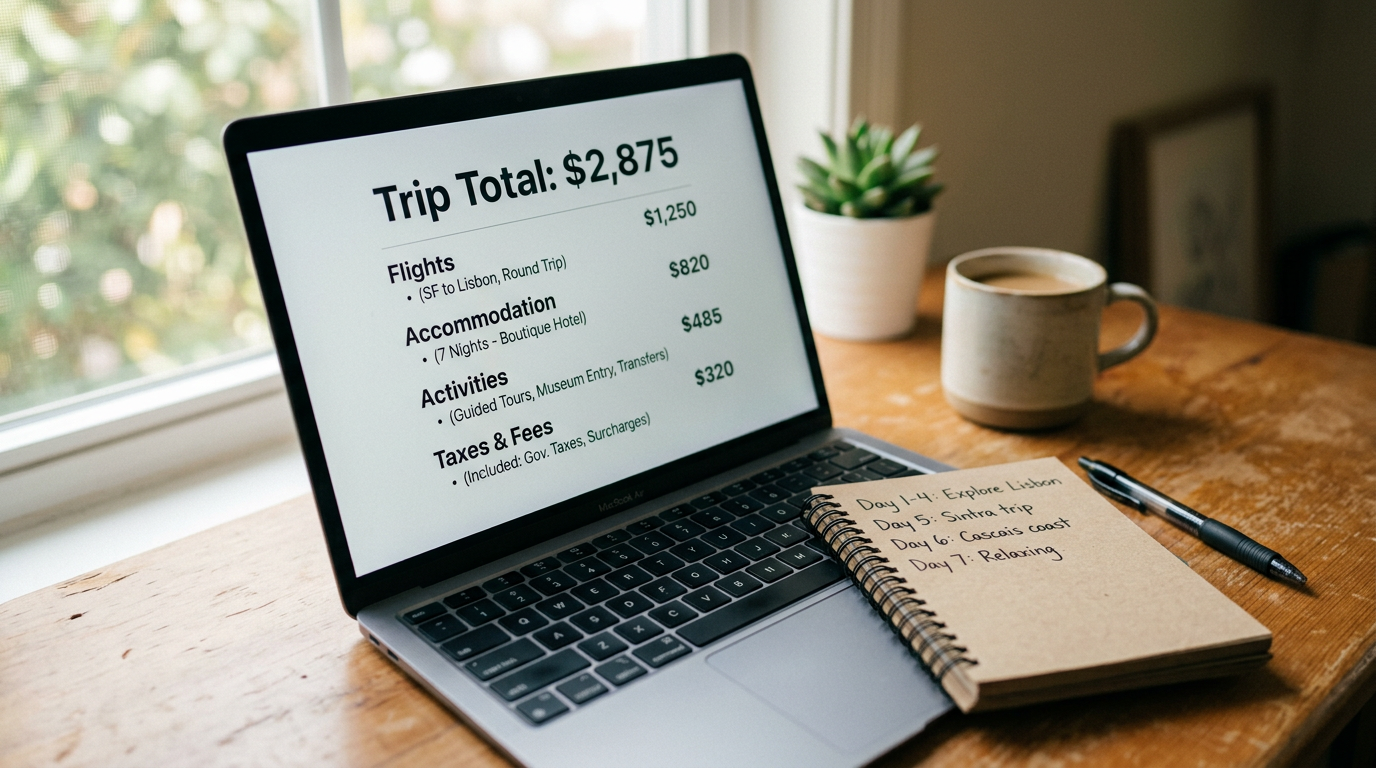
Ask most travel companies what a trip costs and you will get a question back before you get an answer. Where are you going, when, how many people, what is your budget. Only after a call, or three, does a number finally show up in your inbox. That is the industry standard, and it has been the industry standard for so long that most travelers have stopped questioning it.
We do it differently. Tripdash publishes its pricing. Marlow drafts a real, bookable trip in about a minute, with real numbers attached to real flights and real hotels, before you have talked to anyone. Zero booking fees, and nothing added at checkout that was not visible from the start. This is not a minor operational choice. It is the reason the whole model works the way it does, and it is worth explaining plainly why we built it this way instead of defaulting to the case-by-case quote everyone else uses.
Why Travel Agencies Quote Case by Case in the First Place
There are real reasons the traditional model exists, and it is worth being fair to them before making the case against it. A custom quote lets an agency price around a specific traveler's flexibility, a specific set of supplier relationships, and a specific moment in the market. In theory, that flexibility should produce a better price tailored to you.
In practice, case-by-case quoting also does something else: it makes comparison shopping expensive for the traveler. If every price requires a phone call and a wait, checking three options means three phone calls and three waits. Most people do not have the patience for that, so they get one quote, feel a vague unease about whether it is fair, and either take it or walk away without ever finding out. The opacity is not always intentional. But it is convenient for the seller in a way it is rarely convenient for the buyer, and that asymmetry is exactly what upfront travel pricing is designed to remove.
There is also a subtler cost to the quote-and-wait model: it puts the salesperson between you and the number. Once a human has spent twenty minutes on the phone building a custom quote for you, there is a soft social pressure to say yes, distinct from whether the price is actually good. That is not a knock on any individual agent. It is just how the incentives of a private, one-on-one negotiation tend to work, on both sides of the table.
What Publishing Pricing Actually Changes
When pricing is visible before you commit to anything, a few things shift immediately. First, you can compare. You are not relying on your own memory of what a similar trip cost a friend, or on a gut feeling about whether a number sounds high. You can see it, sit with it, and decide without anyone waiting on the other end of a phone call.
Second, it removes a specific kind of anxiety that traditional travel quoting quietly produces: not knowing whether you are the person who negotiated well or the person who got the padded rate. Transparent travel pricing does not mean every trip costs the same, since itineraries genuinely differ in flights, hotels, and season. What it means is that the number you see reflects the actual trip, not your perceived willingness to pay or your comfort pushing back on a quote.
Third, and this is the part that matters most for how we run the business, published pricing forces us to compete on something other than the opacity of the number itself. If a traveler can see the price upfront, we cannot win them with a lowball quote that grows once they are emotionally invested. We have to win them with the quality of the plan Marlow drafts and the judgment the human advisor brings to refining it. Transparent pricing takes the pricing itself off the table as a competitive lever and puts all the pressure on the actual product.
The Real Tradeoff We Accept
Being honest about this means being honest about the tradeoff too. A published, standard approach to pricing means we give up some of the case-by-case flexibility that lets a traditional agency quietly discount for one traveler and quietly mark up for another. We do not consider that a loss. That flexibility is exactly the mechanism that makes quote-based pricing hard to trust in the first place, since the traveler has no way to know which side of it they landed on.
We also give up the ability to use price as a lever during a sales conversation. A traditional model can hold a number back, build rapport, then reveal a price shaped by how the conversation went. We cannot do that, by design, because the number is already out there before the conversation starts. What we get in exchange is a traveler who trusts the number because they saw it before anyone was trying to close them, and an advisor whose whole job becomes making the trip better rather than making the price feel acceptable.
Traditional Quoting vs. Published Pricing, Side by Side
The clearest way to see the difference is to line the two models up directly across the parts of the experience that actually affect a traveler.
| Dimension | Traditional Quote-Based Pricing | Published, Transparent Pricing |
|---|---|---|
| Time to see a price | Hours to days, after a call or form submission | Immediate, generated with the draft itinerary |
| Ability to compare options | Difficult, each quote requires new outreach | Easy, prices are visible before you commit to anything |
| Risk of being upsold | Higher, price can shift as the conversation progresses | Lower, the number is set before any sales conversation happens |
| Clarity on what is included | Varies by agent, easy to leave ambiguous | Consistent, since the same pricing logic applies to everyone |
| Pressure to decide quickly | Common, tied to "this rate won't last" tactics | Minimal, you can sit with the number as long as you want |
| Booking fees | Sometimes hidden until late in the process | Zero booking fees, stated upfront |
What This Looks Like in Practice
Here is what published pricing actually means for anyone using Tripdash, stated plainly rather than left implied.
- You see real pricing attached to a real draft itinerary in about 60 seconds, not after a sales call.
- The price does not move because you asked a lot of questions or seemed hesitant.
- There is no separate booking fee layered on top of what you see, since Tripdash charges zero booking fees.
- You can compare a Marlow draft against another option without needing to request a second quote from us.
- The human advisor who reviews your plan is refining the trip itself, not renegotiating the price with you.
- Nothing about the number changes between the draft stage and the moment you actually book, barring genuine changes in flight or hotel availability that would affect any traveler equally.
Why This Is a Bet on Service, Not Just a Pricing Policy
It would be easy to frame transparent pricing as purely a consumer-friendly gesture, and it is that, but it is also a bet on our own part of the business. Once price is no longer a variable we can quietly adjust per conversation, the only way to win a traveler's trust and their booking is by making Marlow's draft genuinely good and making the human review genuinely useful. That is a harder standard to meet than a well-run sales call, and we think it is the right one.
This is also why we are comfortable being specific about the reasoning instead of just stating the policy. Why travel agencies quote case by case is not a mystery, and it is not always bad faith. But it is a model built around information asymmetry, and asymmetry favors whoever is holding the information back. Publishing our pricing means we do not get to hold anything back. We think that is a better trade for the traveler, and, if we are doing our jobs well, a better trade for us too.
Frequently asked questions
More from Tripdash

The Advisor Who Catches the Layover Marlow Missed
An illustrative case study of how a Tripdash advisor rebuilt a connection that Marlow's AI draft technically approved but shouldn't have. It's a close look at what human review of AI travel plans actually catches, and why the minimum connection time on a boarding pass is not the same thing as a safe one.

The Advisor Who Specializes in Solo Travel for Women
An illustrative look at why some Tripdash advisors build a niche reviewing trips for solo female travelers, and how that specialization plays out inside the queue.

The Difference Between an AI Draft and a Bookable Itinerary
Marlow can draft a trip in about a minute, but a draft is not the same thing as a trip you can pay for. Here is exactly what changes between the two, and why the gap matters.